引言:跳棋的戰略深度Introduction: The Strategic Depth of Chinese Checkers
中國跳棋看似簡單,但實際上蘊含著豐富的策略層次。從 2 人對弈的純粹競技,到 6 人混戰的複雜博弈,不同人數的遊戲需要完全不同的思維方式。本文將深入分析跳棋的各種戰術,幫助你從業餘玩家晉升為策略高手。Chinese Checkers may seem simple, but it actually contains rich strategic layers. From 2-player pure competition to 6-player complex gameplay, different player counts require completely different thinking approaches. This article will analyze various tactics to help you advance from amateur to strategic master.
無論你是剛接觸跳棋的新手,還是想要精進技術的老手,這份指南都將為你提供實用的戰術建議和深度的策略分析。讓我們一起探索跳棋世界的戰略奧秘!Whether you're a newcomer to checkers or an experienced player looking to improve, this guide will provide practical tactical advice and in-depth strategic analysis. Let's explore the strategic mysteries of the checkers world together!
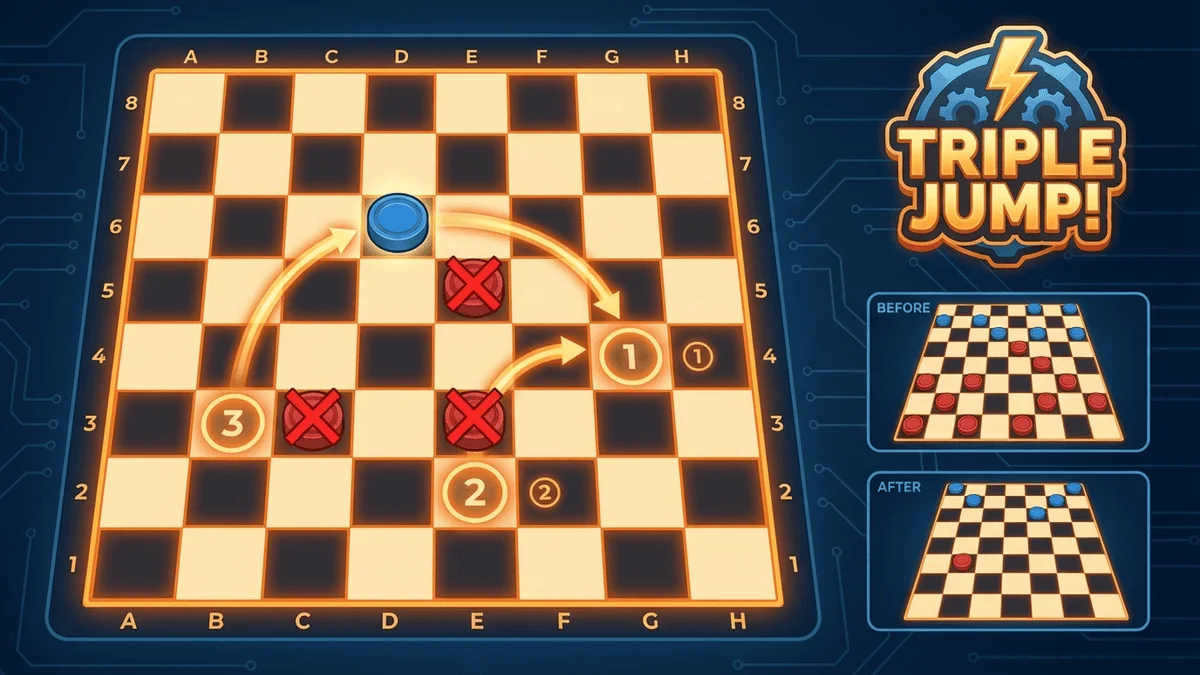
連續跳吃技巧圖解
跳棋類型對比Checkers Type Comparison
中國跳棋 vs 國際跳棋Chinese Checkers vs International Checkers
雖然都叫「跳棋」,但中國跳棋和國際跳棋(Checkers/Draughts)是完全不同的遊戲:Although both are called "checkers," Chinese Checkers and International Checkers (Draughts) are completely different games:
特性Feature
中國跳棋Chinese Checkers
國際跳棋International Checkers
棋盤Board
六芒星(121 位置)Six-pointed star (121 positions)
8×8 或 10×10 方格8×8 or 10×10 grid
棋子數量Piece Count
每人 10 顆10 per player
每人 12 或 20 顆12 or 20 per player
移動方式Movement
六方向,可連跳改變方向Six directions, can change direction during chain jumps
對角線,直線連跳Diagonal, straight line chain jumps
吃子規則Capture Rule
不吃子,只跳過No capture, only hop over
跳過則吃子Capture when jumping over
遊戲目標Game Objective
先到達對面陣營First to reach opposite camp
吃掉或困住對手所有棋子Capture or trap all opponent pieces
玩家數Players
2-6
2
策略重點Strategy Focus
路徑規劃、連跳優化Path planning, chain jump optimization
吃子、控制、終局Capture, control, endgame
本文主要關注中國跳棋的策略,這是一種更注重路徑規劃和競速的遊戲類型。This article focuses on Chinese Checkers strategy, a game type that emphasizes path planning and racing.
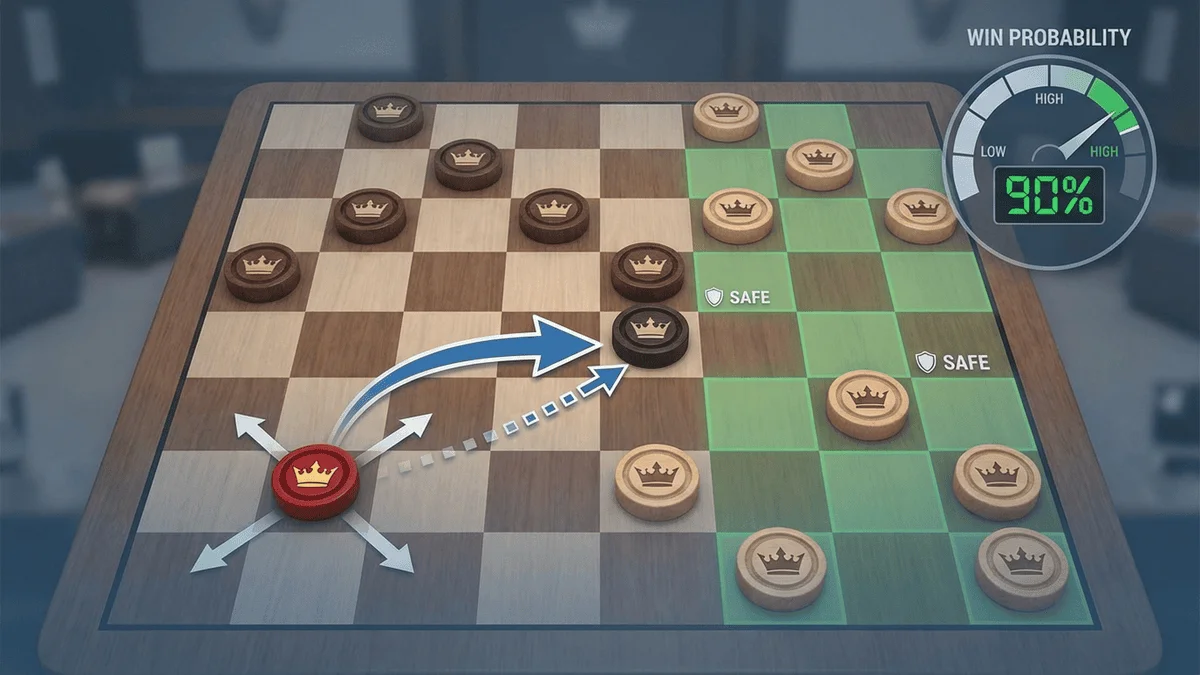
殘局國王戰術圖解
2人 vs 多人對弈:策略差異2-Player vs Multiplayer: Strategy Differences
2 人對弈的特性Characteristics of 2-Player Games
2 人跳棋是最純粹的競技形式,具有以下特點:2-player Chinese Checkers is the purest competitive form, with the following characteristics:
🎯 2 人對弈核心策略🎯 2-Player Core Strategies
直接競爭Direct Competition:只有一個對手,目標明確: Only one opponent, clear objective
空間充裕Ample Space:棋盤有 4 個區域空閒,連跳機會多: 4 board areas empty, many chain jump opportunities
戰術深度Tactical Depth:可以使用複雜的連跳組合和陷阱: Can use complex chain jump combinations and traps
阻擋價值高High Blocking Value:成功阻擋對手能直接決定勝負: Successful blocking can directly determine victory
計算可行Calculable:可以精確計算雙方還需多少步完成: Can precisely calculate how many moves both sides need
📊 2 人對弈實例分析📊 2-Player Game Example Analysis
場景Scenario:你和對手都還有 5 顆棋子未到達目標區: Both you and your opponent have 5 pieces not yet in the target zone
分析Analysis::
計算最優路徑:你需要 8 步,對手需要 7 步 → 對手領先Calculate optimal path: You need 8 moves, opponent needs 7 → Opponent leads
尋找加速機會:能否通過一次大連跳縮短為 6 步?Find acceleration opportunity: Can a big chain jump reduce it to 6 moves?
考慮阻擋:如果無法加速,是否能延緩對手 2 步以上?Consider blocking: If can't accelerate, can you delay opponent by 2+ moves?
執行策略:優先嘗試加速,若不可行則轉為阻擋Execute strategy: Prioritize acceleration, switch to blocking if not feasible
結果Result:成功規劃出 7 步連跳路徑,與對手同步;同時下一步可阻擋對手關鍵跳躍點,最終獲勝。: Successfully planned a 7-move chain jump path, matching opponent; also blocked opponent's key jump point next move, winning in the end.
3-4 人對弈的動態3-4 Player Game Dynamics
增加到 3-4 人後,遊戲性質發生根本變化:With 3-4 players, the game nature fundamentally changes:
🎲 3-4 人對弈策略要點🎲 3-4 Player Strategy Key Points
聯盟與背叛Alliance and Betrayal:臨時結盟阻止領先者,但不能過度幫助盟友: Temporarily ally to stop leader, but don't over-help allies
位置感知Position Awareness:時刻了解自己在所有玩家中的排名: Always know your ranking among all players
機會主義Opportunism:利用他人的棋子作為跳板,而非只靠自己布局: Use others' pieces as springboards, not just your own setup
低調策略Low Profile Strategy:避免成為「公敵」,保持在第 2-3 名的位置: Avoid becoming "public enemy," stay in 2nd-3rd place
終局爆發Endgame Sprint:在最後階段突然加速,趁其他人互相牽制時完成: Suddenly accelerate in final phase while others restrain each other
⚠️ 多人對弈常見錯誤⚠️ Common Multiplayer Mistakes
過早領先Leading Too Early:在中盤就明顯領先,會被其他人聯合阻擋: Obvious lead in mid-game invites joint blocking
過度幫助Over-Helping:為了阻止第一名而幫助第二名太多,反而讓第二名獲勝: Helping 2nd place too much to stop 1st, letting 2nd win instead
忽視側翼Ignoring Flanks:只關注正對面的對手,忽略了側面玩家的威脅: Only focusing on opposite opponent, ignoring side player threats
路徑依賴Path Dependency:固守一條路線,沒有根據其他人的移動靈活調整: Sticking to one route, not adjusting flexibly to others' moves
5-6 人大混戰5-6 Player Battle Royale
滿員 6 人遊戲是最混亂也最有趣的模式:Full 6-player game is the most chaotic and fun mode:
棋盤擁擠Crowded Board:幾乎沒有空位,移動受限: Almost no empty spaces, limited movement
機會均等Equal Opportunity:所有人都可以利用他人的棋子連跳: Everyone can use others' pieces for chain jumps
運氣成分增加Increased Luck Factor:很難完全控制局面,需要抓住突然出現的機會: Hard to fully control the game, must seize sudden opportunities
社交博弈Social Gaming:口頭協議、心理戰、談判技巧變得重要: Verbal agreements, psychological warfare, negotiation skills become important
橋樑保留原則Bridge Preservation Principle:不要過早移走可以作為跳板的棋子: Don't move pieces that serve as springboards too early
多路徑原則Multiple Path Principle:至少準備兩條不同的前進路線: Prepare at least two different advance routes
對稱利用原則Symmetry Utilization Principle:利用棋盤的對稱性,複製成功的路徑: Use board symmetry, replicate successful paths
終局預判原則Endgame Prediction Principle:連跳的終點應該有利於下一步移動: Chain jump endpoint should favor next move
🎯 實戰連跳範例🎯 Practical Chain Jump Example
起點 (A) → 跳過 B → 落點 C → 跳過 D → 落點 E → 跳過 F → 終點 G
分析:
- A → C: 前進 3 格(向目標方向)
- C → E: 前進 4 格(繼續向前)
- E → G: 前進 3 格(接近中心區)
總計:一次移動前進 10 格,遠超單步移動的 1 格
關鍵決策:
- 在 C 點時也可以選擇向左跳,但前進距離只有 2 格
- 選擇向前跳是因為 E 點位置更利於下一步連跳
- G 點靠近棋盤中心,有更多未來的跳躍選項Start (A) → Jump over B → Land C → Jump over D → Land E → Jump over F → End G
Analysis:
- A → C: Advance 3 spaces (toward target)
- C → E: Advance 4 spaces (continue forward)
- E → G: Advance 3 spaces (approach center)
Total: One move advances 10 spaces, far exceeding single-step move of 1
Key Decisions:
- At C point, could also jump left, but only 2 spaces forward
- Chose forward jump because E position favors next chain jump
- G point near board center, more future jump options
常見連跳模式Common Chain Jump Patterns
💡 高效連跳模式💡 Efficient Chain Jump Patterns
Z 字形跳躍Z-Pattern Jump:利用對角線棋子,之字形前進,適合中盤: Use diagonal pieces, zigzag forward, suits mid-game
階梯式跳躍Staircase Jump:逐層向前跳,穩定但較慢,適合開局: Jump forward layer by layer, stable but slow, suits opening
弧形跳躍Arc Jump:繞過擁擠區域,適合多人遊戲: Go around crowded areas, suits multiplayer
直線衝刺Straight Sprint:終局階段,直線連跳快速完成: Endgame phase, straight chain jumps for quick finish
位置優勢分析Position Advantage Analysis
棋盤區域價值評估Board Area Value Assessment
中國跳棋的棋盤可以分為幾個關鍵區域,每個區域的戰略價值不同:The Chinese Checkers board can be divided into several key areas, each with different strategic value:
🗺️ 棋盤區域戰略價值🗺️ Board Area Strategic Value
中央區域(價值:★★★★★)Central Area (Value: ★★★★★)
連跳機會最多Most chain jump opportunities
可以快速改變方向Can quickly change direction
控制中央 = 控制節奏Control center = Control tempo
進攻通道(價值:★★★★☆)Attack Corridor (Value: ★★★★☆)
連接起始區和目標區的直線路徑Straight path connecting start and target areas
是主要的前進路線Main advance route
需要防止被對手阻斷Prevent opponent from blocking
側翼區域(價值:★★★☆☆)Flank Areas (Value: ★★★☆☆)
可作為備用路徑Can serve as backup path
多人遊戲中較少擁擠Less crowded in multiplayer
適合迂迴戰術Suits flanking tactics
起始區(價值:★★☆☆☆)Starting Area (Value: ★★☆☆☆)
開局階段重要(提供跳板)Important in opening (provides springboards)
中後期價值下降Value decreases in mid-late game
不要過早清空Don't empty too early
目標區(價值:★★★★★)Target Area (Value: ★★★★★)
終局階段最重要Most important in endgame
布局順序決定能否快速完成Layout order determines quick finish
需要提前規劃佔位Plan positioning in advance
關鍵位置識別Key Position Identification
某些特定位置具有戰略意義,控制這些位置能獲得顯著優勢:Certain specific positions have strategic significance; controlling them provides significant advantage:
中央樞紐點Central Hub Points:棋盤正中心及其周圍,六個方向都可連跳: Board center and surroundings, can chain jump in all six directions
瓶頸位置Bottleneck Positions:進入目標區的必經之路,阻擋這裡能延緩對手: Must-pass route to target area, blocking here delays opponent
橋接點Bridge Points:連接兩個區域的關鍵跳板: Key springboards connecting two areas
安全位置Safe Positions:難以被阻擋、有多條退路的位置: Hard to block, positions with multiple escape routes
防守與進攻的平衡Balance Between Defense and Offense
何時選擇進攻?When to Choose Offense?
✅ 進攻時機判斷✅ Offense Timing Judgment
你的連跳路徑比對手更優Your chain jump path is better than opponent's
領先對手 3 步以上Leading opponent by 3+ moves
對手的棋子佈局混亂,難以快速追趕Opponent's piece layout is chaotic, hard to catch up quickly
終局階段,雙方都在衝刺時Endgame phase when both sides are sprinting
多人遊戲中,你處於第 2-3 名的位置In multiplayer, you're in 2nd-3rd position
何時選擇防守?When to Choose Defense?
🛡️ 防守時機判斷🛡️ Defense Timing Judgment
對手領先你 2 步以上Opponent leads by 2+ moves
你的前進路徑被阻擋Your advance path is blocked
對手即將完成(還剩 3 顆棋子以內)Opponent about to finish (3 or fewer pieces left)
多人遊戲中有玩家明顯領先A player is clearly leading in multiplayer
第 6-7 步Move 6-7:全力衝刺,不再防守(終局階段): Full sprint, no more defense (endgame phase)
關鍵思路Key Thinking:在中盤階段靈活切換,既不完全放棄進攻,也不過度防守浪費步數。: Flexibly switch in mid-game; don't fully abandon offense or over-defend wasting moves.
實戰技巧總結Practical Tips Summary
🏆 成為高手的 10 條建議🏆 10 Tips to Become a Master
開局不要急Don't Rush Opening:花時間建立良好的橋樑結構: Take time to build good bridge structure
中盤要計算Calculate Mid-Game:每一步都要想「這能為下一步創造什麼?」: Think "what does this create for next move?"
終局要精準Be Precise in Endgame:提前 3-4 步規劃目標區的佔位順序: Plan target area positioning 3-4 moves ahead
多看全局Watch the Big Picture:不要只盯著自己的棋子,觀察所有人的動向: Don't just watch your pieces, observe everyone's moves
利用對手Use Opponents:對手的棋子也是你的跳板: Opponent's pieces are also your springboards
保持彈性Stay Flexible:至少準備兩條前進路線: Prepare at least two advance routes
適時防守Defend When Needed:領先時也要警惕對手的反撲: When leading, beware opponent's comeback
控制節奏Control Tempo:領先時可以穩健推進,落後時要冒險搏殺: Lead = steady advance; behind = take risks
學習覆盤Review Games:遊戲後回顧哪些步驟可以改進: After games, review which moves could improve
大量練習Practice a Lot:策略理論需要實戰才能內化: Strategy theory needs practice to internalize
結語:從理論到實踐Conclusion: From Theory to Practice
跳棋策略的學習是一個漸進的過程。理解了本文的理論後,關鍵在於大量實踐。每一局遊戲都是學習的機會:Learning Chinese Checkers strategy is a gradual process. After understanding the theory in this article, the key is extensive practice. Every game is a learning opportunity:
嘗試不同的開局佈局Try different opening layouts
測試各種連跳路徑Test various chain jump paths
體驗 2 人、3 人、多人遊戲的不同策略Experience different strategies in 2-player, 3-player, and multiplayer games
挑戰不同難度的 AI 對手Challenge AI opponents of different difficulties
與高手對弈,學習他們的思路Play against masters and learn their thinking
記住:最好的策略是靈活的策略。不要拘泥於某一種打法,而是根據局面動態調整。隨著經驗的積累,你會逐漸形成自己的風格,並在享受遊戲的同時不斷提升。Remember: The best strategy is a flexible strategy. Don't stick to one style; adjust dynamically based on the situation. With accumulated experience, you'll gradually develop your own style and continuously improve while enjoying the game.