棋類遊戲不僅是娛樂活動,更是訓練大腦的有效工具。神經科學研究顯示,經常下棋的人在工作記憶、計劃能力、問題解決等認知領域表現更優秀。本文將從心理學角度深入分析,如何通過棋類遊戲提升認知能力,克服心理障礙,最終邁向高手之路。Board games are not just entertainment—they're effective tools for training the brain. Neuroscience research shows that frequent chess players perform better in cognitive areas such as working memory, planning ability, and problem-solving. This article analyzes from a psychological perspective how to enhance cognitive abilities through board games, overcome mental barriers, and ultimately become an expert.
關鍵觀點:Key Point: 棋類遊戲的進步不僅依賴技術訓練,更重要的是心理素質的培養。理解並掌握背後的心理機制,能讓你的學習效率提升 2-3 倍。Progress in board games depends not only on technical training but more importantly on psychological development. Understanding and mastering the underlying psychological mechanisms can improve your learning efficiency by 2-3 times.
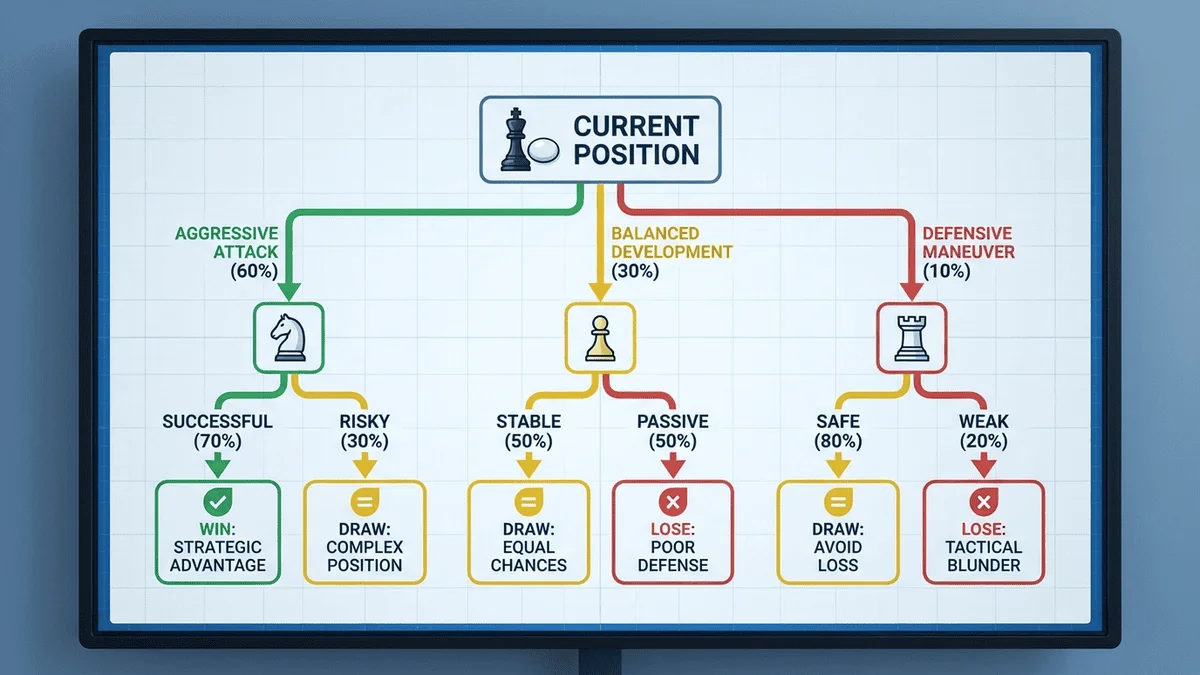
遊戲決策樹流程圖
一、棋類遊戲與認知能力提升1. Board Games and Cognitive Enhancement
1.1 大腦的四大認知系統1.1 The Brain's Four Cognitive Systems
棋類遊戲主要訓練以下四個認知系統:Board games primarily train the following four cognitive systems:
🧠 工作記憶系統Working Memory System
短期記憶棋盤狀態、可能的走法、對手的威脅等信息。研究顯示,國際象棋大師能同時記憶 7-9 個棋局模式。Short-term memory for board state, possible moves, opponent's threats, etc. Research shows that chess masters can memorize 7-9 game patterns simultaneously.
🎯 注意力系統Attention System
同時關注多個區域的變化,過濾無關信息。頂尖棋手的注意力持久度可達普通人的 2-3 倍。Simultaneously tracking changes in multiple areas while filtering irrelevant information. Top players' attention span can be 2-3 times that of average people.
🔮 規劃系統Planning System
預測未來 3-10 步的發展,制定長期戰略。這種能力直接轉移到生活中的目標規劃與時間管理。Predicting 3-10 moves ahead and formulating long-term strategies. This ability transfers directly to goal planning and time management in life.
⚡ 決策系統Decision System
在有限時間內評估多個選項,做出最優決策。這是最核心也是最難訓練的能力。Evaluating multiple options within limited time and making optimal decisions. This is the core and most difficult ability to train.
1.2 神經可塑性與訓練效果1.2 Neuroplasticity and Training Effects
倫敦大學的研究發現,經過 6 個月的系統性棋類訓練,受試者的灰質密度在前額葉皮層(負責規劃)和頂葉(負責空間處理)顯著增加。這證明了大腦的神經可塑性:Research from the University of London found that after 6 months of systematic board game training, subjects showed significant increases in gray matter density in the prefrontal cortex (responsible for planning) and parietal lobe (responsible for spatial processing). This demonstrates the brain's neuroplasticity:
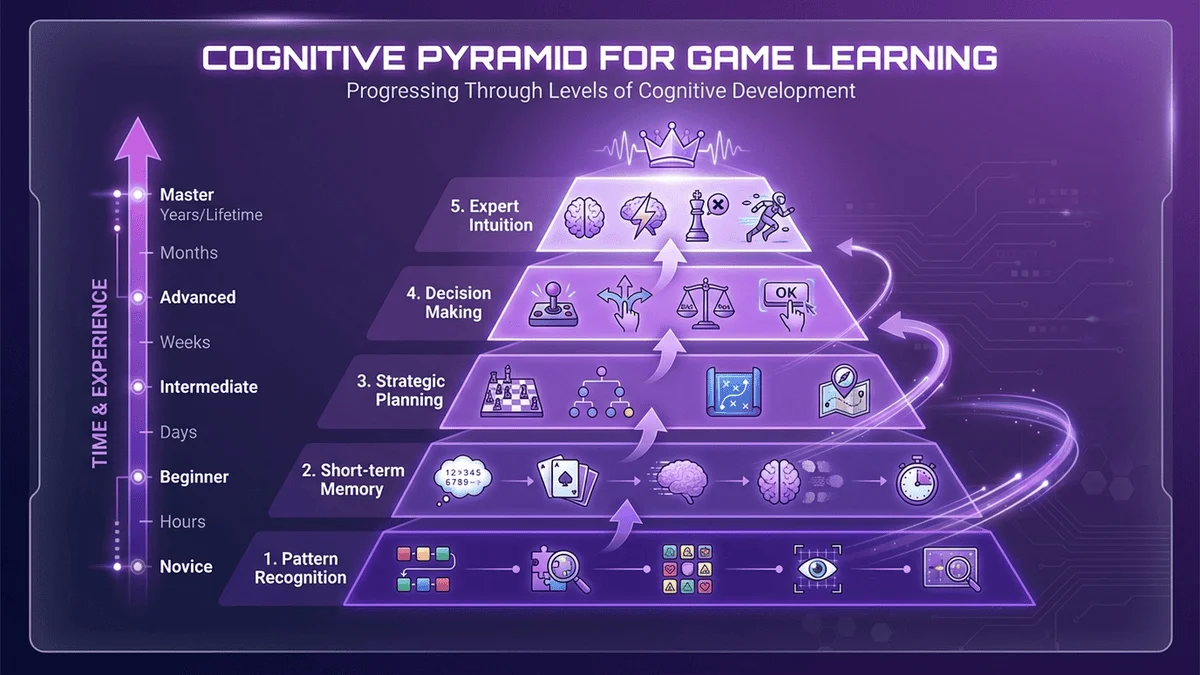
初學階段(0-3個月)Beginner Stage (0-3 months):主要建立基礎神經迴路,進步明顯但不穩定: Mainly establishing basic neural circuits, progress is obvious but unstable
發展階段(3-12個月)Development Stage (3-12 months):神經連接強化,開始形成直覺和模式識別能力: Neural connections strengthen, beginning to form intuition and pattern recognition abilities
高手階段(12個月以上)Expert Stage (12+ months):形成專家級的「組塊記憶」,能瞬間識別複雜棋局: Forming expert-level "chunking memory," able to instantly recognize complex game positions
💡 實用建議:💡 Practical Tip: 每天 30 分鐘的集中訓練,效果遠優於每週一次 3 小時的集訓。大腦需要時間鞏固新建立的神經連接。30 minutes of focused training daily is far more effective than a single 3-hour session per week. The brain needs time to consolidate newly established neural connections.
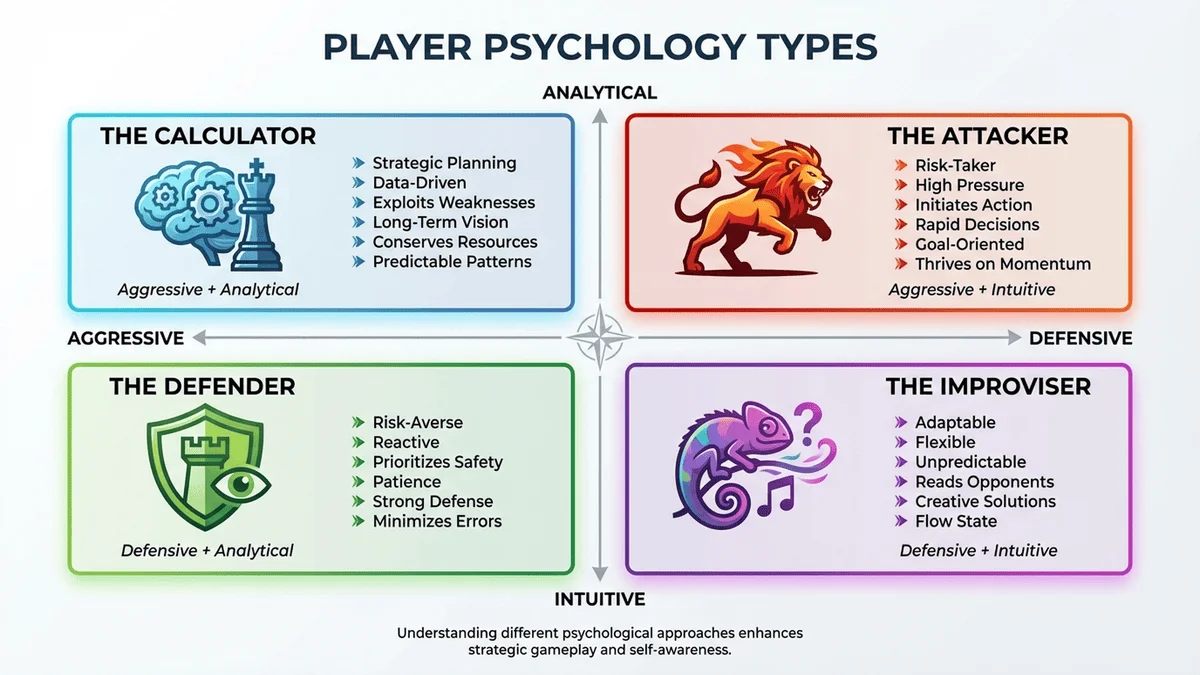
玩家心理類型分析圖
二、新手常見的五大心理障礙2. Five Common Psychological Barriers for Beginners
症狀:Symptoms: 面對複雜局面時,思考過度導致無法做出決策,經常超時或做出倉促決定。When facing complex situations, overthinking leads to inability to make decisions, often resulting in time-outs or rushed decisions.
心理機制:Psychological Mechanism: 害怕犯錯導致的過度謹慎。大腦試圖計算所有可能性,但人類的工作記憶容量有限(7±2個項目),導致認知超載。Excessive caution caused by fear of making mistakes. The brain tries to calculate all possibilities, but human working memory capacity is limited (7±2 items), leading to cognitive overload.
解決方案:Solutions:
使用「3候選法」:只考慮最優的 3 個選項,強制自己在 2 分鐘內選擇Use the "3 Candidate Method": Only consider the top 3 options, force yourself to choose within 2 minutes
建立決策樹:將複雜問題分解為「如果-那麼」規則Build decision trees: Break down complex problems into "if-then" rules
接受「足夠好」哲學:80分的快速決策往往優於追求100分的遲緩決策Accept the "good enough" philosophy: A quick 80-point decision is often better than a slow pursuit of a 100-point decision
症狀:Symptoms: 只看到支持自己想法的信息,忽略對手的威脅或自己計劃的漏洞。Only seeing information that supports your own ideas, ignoring opponent's threats or flaws in your own plans.
心理機制:Psychological Mechanism: 大腦天生偏好確認已有信念,這是為了節省認知資源。但在棋類遊戲中,這會導致盲目自信。The brain naturally prefers to confirm existing beliefs to conserve cognitive resources. However, in board games, this leads to blind overconfidence.
解決方案:Solutions:
「魔鬼辯護人」技巧:每次決策前,主動思考「為什麼這個決定可能是錯的?」"Devil's Advocate" technique: Before each decision, actively think "Why might this decision be wrong?"
從對手視角思考:問自己「如果我是對手,我會如何反擊?」Think from opponent's perspective: Ask yourself "If I were my opponent, how would I counter-attack?"
記錄錯誤:保留失敗棋局,分析哪些是確認偏誤導致的失誤Record mistakes: Keep failed games and analyze which mistakes were caused by confirmation bias
障礙 3:損失厭惡(Loss Aversion)Barrier 3: Loss Aversion
症狀:Symptoms: 過度保護每一個棋子,不敢進行必要的交換或犧牲,導致錯失進攻機會。Overprotecting every piece, afraid to make necessary exchanges or sacrifices, leading to missed attacking opportunities.
心理機制:Psychological Mechanism: 諾貝爾獎得主 Kahneman 發現,人類對損失的痛苦感是獲得同等收益快樂感的 2.5 倍。在棋類遊戲中,丟失一個棋子的痛苦會放大決策扭曲。Nobel laureate Kahneman discovered that humans feel the pain of loss 2.5 times more intensely than the pleasure of equivalent gains. In board games, the pain of losing a piece amplifies decision distortion.
解決方案:Solutions:
重新框架思維:將「損失一個車」重新定義為「投資一個車換取勝利」Reframe your thinking: Redefine "losing a rook" as "investing a rook to win the game"
計算期望值:不是看單個棋子的價值,而是看整體局勢的得分變化Calculate expected value: Don't focus on individual piece value, but on the overall position score change
學習犧牲戰術:研究經典的「棋子犧牲」案例,建立正確的價值觀Study sacrifice tactics: Research classic "piece sacrifice" cases to establish correct value judgment
障礙 4:情緒傾斜(Tilt)Barrier 4: Emotional Tilt
症狀:Symptoms: 連續失敗後情緒失控,做出不理性決策,進入「越輸越上頭」的惡性循環。Losing emotional control after consecutive losses, making irrational decisions, entering a vicious cycle of "the more you lose, the more tilted you become."
心理機制:Psychological Mechanism: 失敗觸發杏仁核(情緒中樞),釋放皮質醇(壓力激素),抑制前額葉皮層(理性決策區)。這是生物演化留下的「戰或逃」反應。Failure triggers the amygdala (emotional center), releasing cortisol (stress hormone), inhibiting the prefrontal cortex (rational decision-making area). This is the "fight or flight" response left by evolution.
解決方案:Solutions:
「三次規則」:連續失敗三局後,強制休息15分鐘,做深呼吸或輕度運動"Three Strike Rule": After three consecutive losses, take a mandatory 15-minute break for deep breathing or light exercise
正念冥想訓練:每天10分鐘的冥想能顯著提升情緒控制能力Mindfulness meditation training: 10 minutes of daily meditation can significantly improve emotional control
建立情緒指標:用 1-10 分量化當前情緒狀態,低於 5 分時不下棋Establish emotional indicators: Rate your current emotional state on a 1-10 scale, don't play when below 5
症狀:Symptoms: 初期進步快速,但到某個水平後長期停滯,找不到突破方向。Rapid initial progress, but long-term stagnation after reaching a certain level, unable to find breakthrough direction.
心理機制:Psychological Mechanism: 這是技能學習的正常階段。大腦已經優化了當前策略的神經迴路,需要新的刺激來建立更高級的連接。This is a normal stage in skill learning. The brain has already optimized neural circuits for current strategies and needs new stimulation to build more advanced connections.
解決方案:Solutions:
刻意練習:不是重複已掌握的技巧,而是專注練習「剛好超出舒適區」的難點Deliberate practice: Don't repeat mastered skills, focus on practicing challenges "just outside your comfort zone"
交叉訓練:嘗試不同類型的棋類遊戲,激發新的思維模式Cross-training: Try different types of board games to stimulate new thinking patterns
尋求高手指導:他們能發現你的盲點,提供突破性洞察Seek expert guidance: They can identify your blind spots and provide breakthrough insights
三、高手的壓力管理技巧3. Expert Stress Management Techniques
職業棋手在重要比賽中承受巨大壓力。他們使用以下科學驗證的技巧來保持最佳狀態:Professional players endure tremendous pressure in important competitions. They use the following scientifically validated techniques to maintain peak performance:
原理:Principle: 激活副交感神經系統,降低心率和皮質醇水平。國際象棋世界冠軍 Magnus Carlsen 在關鍵時刻經常使用此技巧。Activates the parasympathetic nervous system, lowering heart rate and cortisol levels. World Chess Champion Magnus Carlsen frequently uses this technique at critical moments.
將壓力重新解讀為「興奮」而非「威脅」。哈佛研究顯示,告訴自己「我很興奮」的受試者,在壓力測試中表現提升 25%。Reinterpret stress as "excitement" rather than "threat." Harvard research shows that subjects who told themselves "I'm excited" improved their performance by 25% in stress tests.
實用句式:Practical Phrases:
❌ 壓力句式:「我不能失誤,否則就輸了」❌ Stress phrase: "I can't make mistakes, or I'll lose"
✅ 興奮句式:「這是展示我訓練成果的好機會」✅ Excitement phrase: "This is a great opportunity to showcase my training"
⏰ 時間管理法(減少決策壓力)⏰ Time Management (Reducing Decision Pressure)
為不同階段分配時間預算:Allocate time budgets for different phases:
開局(前10步):Opening (first 10 moves): 使用 20% 時間 - 這是準備階段,應該快速執行已熟悉的套路Use 20% of time - This is the preparation phase, execute familiar patterns quickly
中局(11-30步):Middlegame (moves 11-30): 使用 50% 時間 - 這是決定勝負的關鍵,允許深度思考Use 50% of time - This is the decisive phase, allow deep thinking
殘局(30步以後):Endgame (after move 30): 使用 30% 時間 - 局面簡化,計算更精確Use 30% of time - Position simplifies, calculations become more precise
這種策略避免了後期時間不足的恐慌。This strategy prevents panic from insufficient time in later stages.
四、決策心理學:如何做出更好的選擇4. Decision Psychology: How to Make Better Choices
4.1 雙系統理論4.1 Dual System Theory
諾貝爾獎得主 Daniel Kahneman 提出的「思考,快與慢」理論在棋類遊戲中尤為重要:Nobel laureate Daniel Kahneman's "Thinking, Fast and Slow" theory is particularly important in board games:
風險:Risks: 耗費時間,容易疲勞Time-consuming, prone to fatigue
高手策略:Expert Strategy: 用系統 1 篩選候選步,用系統 2 驗證最佳選項。新手常犯的錯誤是全程使用系統 2(導致疲勞)或全程使用系統 1(導致失誤)。Use System 1 to filter candidate moves, use System 2 to verify the best option. Common mistakes by beginners include using System 2 throughout (causing fatigue) or using System 1 throughout (causing blunders).
4.2 啟發式決策框架4.2 Heuristic Decision Framework
面對複雜局面時,使用以下啟發式規則快速縮小搜索空間:When facing complex positions, use the following heuristic rules to quickly narrow the search space:
威脅優先原則:Threat Priority Principle: 首先檢查對手的所有威脅,確保沒有致命漏洞First check all opponent's threats, ensure no fatal vulnerabilities
主動權原則:Initiative Principle: 在條件相近時,選擇能掌握主動權的走法When conditions are similar, choose moves that seize the initiative
簡化原則:Simplification Principle: 領先時簡化局面,落後時保持複雜性Simplify when ahead, keep complexity when behind
中心控制原則:Center Control Principle: 優先佔領或控制棋盤中心區域Prioritize occupying or controlling the center of the board
發展原則:Development Principle: 早期優先發展棋子,而非過早進攻Prioritize piece development in the early game rather than premature attacks
這些規則不是絕對真理,但能在 80% 的情況下提供可靠指導,節省寶貴的思考時間。These rules are not absolute truths, but they provide reliable guidance in 80% of situations, saving valuable thinking time.
五、對手心理分析與應對策略5. Opponent Psychology Analysis and Counter-Strategies
高水平對弈不僅是技術的較量,更是心理的博弈。識別對手的心理模式,並制定針對性策略:High-level play is not just a technical competition, but also a psychological battle. Identify your opponent's psychological patterns and develop targeted strategies:
🔥 進攻型對手🔥 Aggressive Opponent
特徵:Characteristics: 喜歡主動進攻,犧牲棋子換取攻勢,不喜歡防守或簡化局面。Likes to attack proactively, sacrifices pieces for attacking chances, dislikes defending or simplifying positions.
特徵:Characteristics: 深度計算每一步,決策緩慢但準確,依賴精確評估。Deeply calculates every move, slow but accurate decisions, relies on precise evaluation.
心理弱點:Psychological Weakness: 面對混亂局面容易迷失,直覺能力較弱。Easily lost in chaotic positions, weaker intuition.
應對策略:Counter-Strategy:
創造不對稱局面,打破平衡Create asymmetric positions, break the balance
引入不確定性(如棋子交換後的複雜中局)Introduce uncertainty (like complex middlegames after piece exchanges)
快速下棋,增加對手時間壓力Play fast, increase opponent's time pressure
💫 直覺型對手💫 Intuitive Opponent
特徵:Characteristics: 依賴模式識別和直覺,下棋快速,風格靈活多變。Relies on pattern recognition and intuition, plays fast, flexible and versatile style.
心理弱點:Psychological Weakness: 在需要精確計算的殘局中表現下降,容易犯低級錯誤。Performance drops in endgames requiring precise calculation, prone to blunders.
應對策略:Counter-Strategy:
將對局拖入需要精確計算的殘局Drag the game into endgames requiring precise calculation
設置戰術陷阱,利用對手的快速決策Set tactical traps, exploit opponent's fast decisions
保持局面清晰,減少對手的創造空間Keep positions clear, reduce opponent's creative space
六、勝負心態調整:從結果導向到過程導向6. Mindset Adjustment: From Outcome-Oriented to Process-Oriented
心理學研究顯示,頂尖棋手與普通玩家最大的差異不在技術,而在心態。以下是經過驗證的心態調整策略:Psychological research shows that the biggest difference between top players and average players is not technique, but mindset. Here are proven mindset adjustment strategies:
🎯 成長型思維 vs 固定型思維🎯 Growth Mindset vs Fixed Mindset
史丹佛大學心理學家 Carol Dweck 的研究發現:Stanford psychologist Carol Dweck's research found:
❌ 固定型思維(阻礙進步)❌ Fixed Mindset (Hinders Progress)
「我輸了,說明我不是下棋的料」"I lost, which means I'm not cut out for this game"
「他贏了是因為他天賦好」"He won because he's talented"
「我已經盡力了,沒辦法再進步」"I've done my best, I can't improve anymore"
✅ 成長型思維(促進進步)✅ Growth Mindset (Promotes Progress)
「這次失敗教會我一個重要教訓」"This failure taught me an important lesson"
「他的策略很有效,我可以學習」"His strategy was effective, I can learn from it"
「通過刻意練習,我能突破瓶頸」"Through deliberate practice, I can break through the plateau"
📈 過程導向的目標設定📈 Process-Oriented Goal Setting
不要設定「我要贏得這場比賽」(結果導向),而是:Don't set "I want to win this game" (outcome-oriented), instead:
「每一步都花至少30秒思考對手的威脅」(注意力目標)"Spend at least 30 seconds on each move thinking about opponent's threats" (attention goal)
「在時間壓力下保持冷靜呼吸」(情緒管理目標)"Maintain calm breathing under time pressure" (emotional management goal)
「至少考慮3個候選步再做決定」(決策流程目標)"Consider at least 3 candidate moves before deciding" (decision process goal)
「賽後分析至少3個關鍵轉折點」(學習目標)"Analyze at least 3 key turning points after the game" (learning goal)
為什麼有效?Why is this effective? 過程是你能控制的,結果往往受運氣影響。專注過程能減少焦慮,提升實際表現。You can control the process, but outcomes are often affected by luck. Focusing on the process reduces anxiety and improves actual performance.
🔄 失敗後的復原力訓練🔄 Post-Failure Resilience Training
職業棋手使用「3R 復原法」:Professional players use the "3R Recovery Method":
Review(檢討):: 客觀分析失敗原因,寫下 3 個具體改進點Objectively analyze reasons for failure, write down 3 specific improvement points
Reframe(重構):: 將失敗重新定義為「獲得寶貴數據的實驗」Redefine failure as "an experiment that yielded valuable data"
Recommit(重新投入):: 立即制定下一步行動計劃,保持前進動力Immediately create an action plan for the next step, maintain forward momentum
案例:Case Study: 世界冠軍 Magnus Carlsen 在2018年世錦賽首局失利後,使用這套方法快速調整,最終成功衛冕。他在採訪中說:「每次失敗都讓我更了解自己的弱點,這比勝利更有價值。」World Champion Magnus Carlsen used this method to quickly adjust after losing the first game of the 2018 World Championship, ultimately successfully defending his title. He said in an interview: "Every failure teaches me more about my weaknesses—this is more valuable than winning."
建立你的心理韌性系統Build Your Mental Resilience System
整合以上所有技巧,建立個人化的心理管理系統:Integrate all the above techniques to build a personalized mental management system:
總結:心智訓練是通往高手的必經之路Conclusion: Mental Training is the Path to Mastery
棋類遊戲的進步遵循「技術 × 心理 = 實力」的公式。許多玩家只專注技術訓練(開局庫、戰術題),卻忽視了心理因素。然而研究顯示,在高水平對弈中,心理素質往往決定 50% 以上的勝負。Progress in board games follows the formula "Technique × Psychology = Strength." Many players focus only on technical training (opening libraries, tactical puzzles) but neglect psychological factors. However, research shows that in high-level play, psychological quality often determines more than 50% of the outcome.
行動建議:Action Recommendations:
選擇本文介紹的 1-2 個技巧,專注練習 30 天Choose 1-2 techniques from this article and focus on practicing them for 30 days
每天花 10 分鐘做心理訓練(冥想、呼吸法、認知重構)Spend 10 minutes daily on mental training (meditation, breathing exercises, cognitive reframing)
建立「心理日誌」,記錄情緒狀態與表現的關係Keep a "psychology journal" to record the relationship between emotional state and performance
尋找志同道合的棋友,互相分享心理管理經驗Find like-minded players to share mental management experiences
記住:從新手到高手的旅程,不僅是棋力的提升,更是心智的進化。擁抱挑戰,享受成長,你終將到達理想的高度。Remember: The journey from beginner to master is not just about improving your game skills, but also about evolving your mind. Embrace challenges, enjoy growth, and you will eventually reach your desired heights.