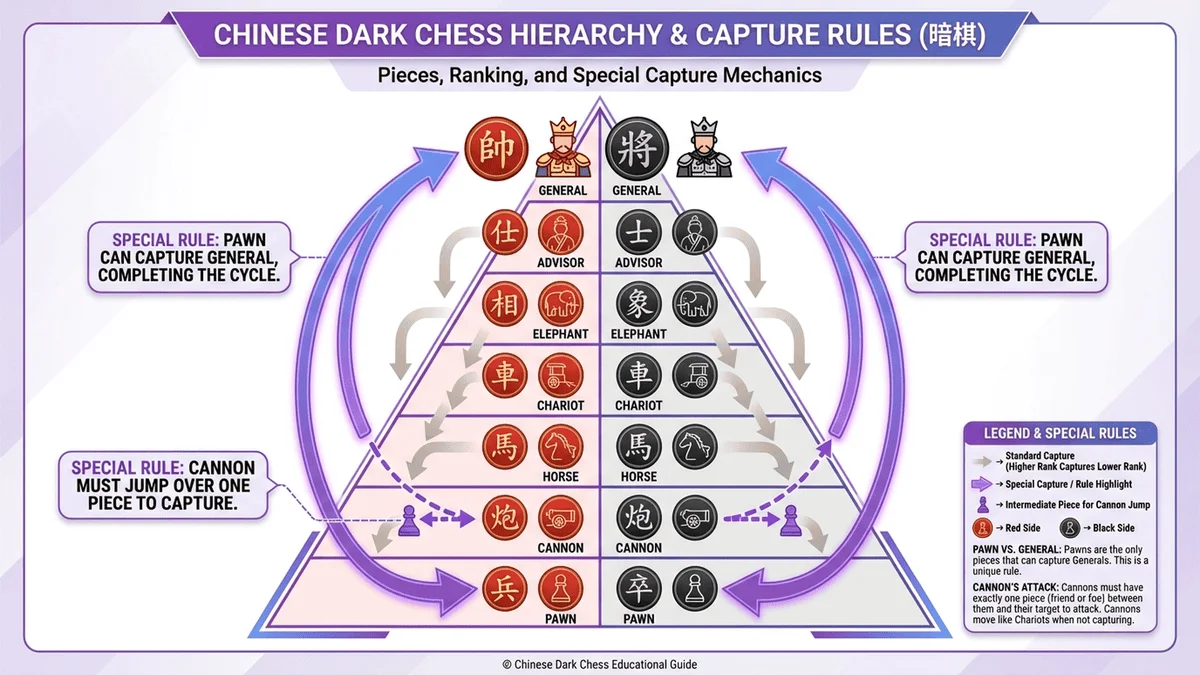
許多人認為暗棋是純粹的運氣遊戲,但事實遠非如此。Many people believe Dark Chess is purely a game of luck, but the reality is far from it. 真正的暗棋高手能穩定維持 60-70% 的勝率True Dark Chess masters can consistently maintain a 60-70% win rate,這絕非運氣所能解釋。本文將深入剖析暗棋背後的數學原理和記憶技巧,幫助你從依賴運氣轉變為依賴技術。, which cannot be explained by luck alone. This article will delve into the mathematical principles and memory techniques behind Dark Chess, helping you transition from relying on luck to relying on skill.
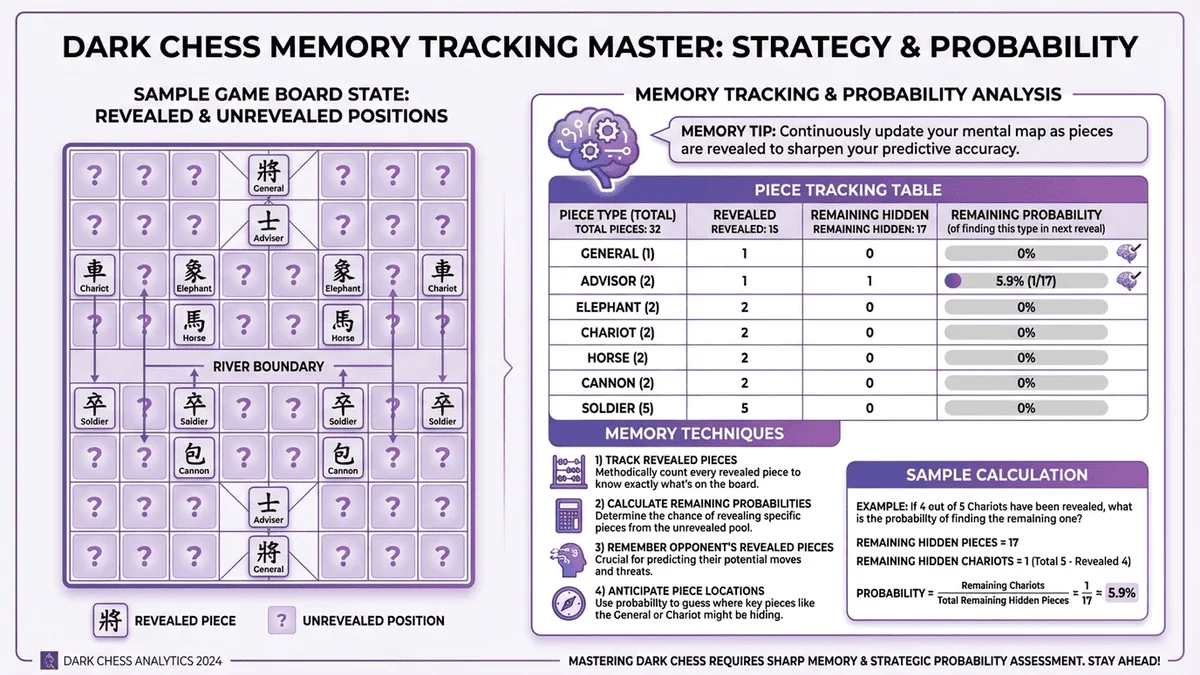
暗棋的精髓在於兩大核心能力:The essence of Dark Chess lies in two core abilities: 機率計算probability calculation和 and 記憶系統memory systems。前者幫助你做出最優決策,後者讓你充分利用已知信息。掌握這兩項技能,你就能在不確定性中找到確定的勝利路徑。. The former helps you make optimal decisions, while the latter allows you to fully utilize known information. Master these two skills, and you can find certain paths to victory amid uncertainty.
暗棋記憶系統信息圖,展示已翻開棋子記錄和剩餘機率計算方法
第一部分:機率計算的藝術Part One: The Art of Probability Calculation
1. 基本機率公式1. Basic Probability Formula
暗棋的機率計算基於一個簡單但強大的公式:Probability calculation in Dark Chess is based on a simple but powerful formula:
核心公式Core Formula
P(事件 A) = 有利結果數 / 總可能結果數P(Event A) = Favorable outcomes / Total possible outcomes
應用於暗棋:Applied to Dark Chess:
P(翻到己方棋子) = 剩餘己方未翻棋子數 / 剩餘總未翻棋子數P(Flipping your piece) = Remaining unflipped pieces of your side / Total remaining unflipped pieces
📊 基礎範例📊 Basic Example
情境Scenario:棋盤還有 16 顆未翻棋子: 16 unflipped pieces remain on the board
己方(紅)還剩 7 顆未翻Your side (Red) has 7 unflipped pieces remaining
對方(黑)還剩 9 顆未翻Opponent (Black) has 9 unflipped pieces remaining
決策Decision:翻到己方帥的機率很低(8%),但如果翻到對方(58%),可能是大子,風險較高。: Low probability of flipping your General (8%), but if you flip opponent's piece (58%), it might be a major piece, higher risk.
3. 貝氏定理應用3. Bayes' Theorem Application
貝氏定理幫助我們根據新信息更新機率:Bayes' theorem helps us update probabilities based on new information:
貝氏定理(簡化版)Bayes' Theorem (Simplified)
P(A | B) = P(B | A) × P(A) / P(B)
暗棋應用:Dark Chess Application:
已知翻出一顆兵,更新剩餘棋子的機率分布After flipping a Soldier, update the probability distribution of remaining pieces
期望價值(黑) ≈ 平均約 3 分(多為中小子)Expected Value (Black) ≈ ~3 pts average (mostly minor pieces)
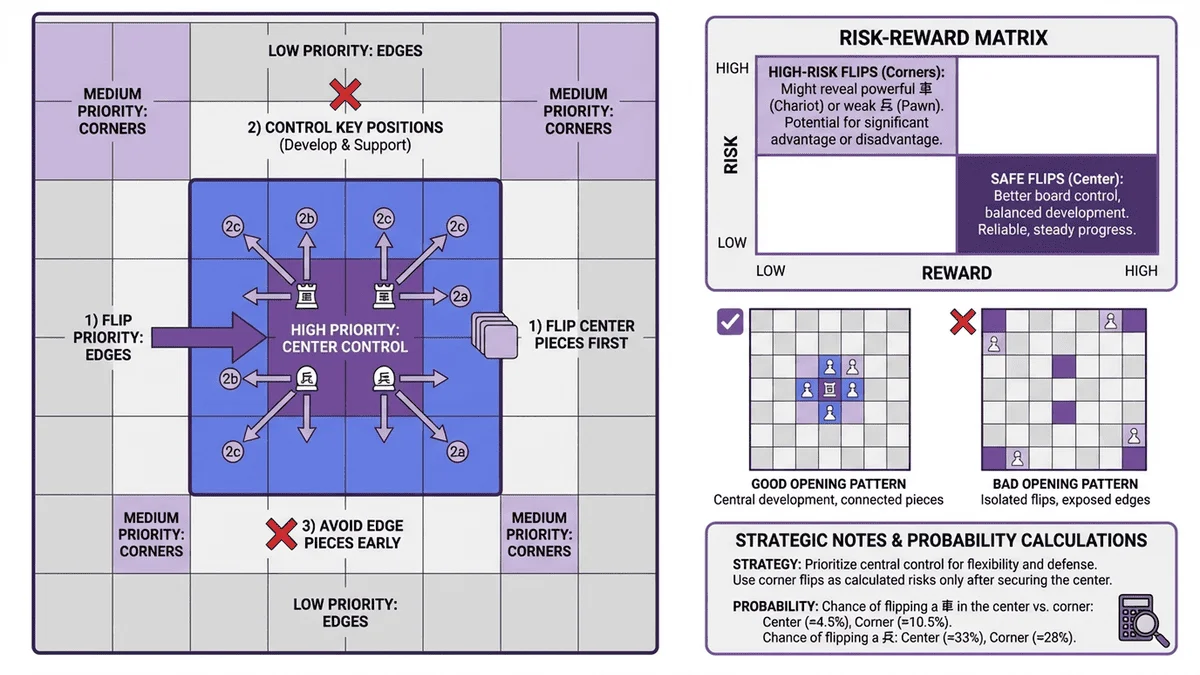
決策Decision:雖然翻到黑方機率高(67%),但紅方期望價值更高(4.17 vs 3),且目前領先。: Although higher probability of flipping Black (67%), Red's expected value is higher (4.17 vs 3), and currently leading. 建議:先走棋鞏固優勢,除非有絕佳的翻棋位置(中間且安全)Recommendation: Move first to consolidate advantage, unless there's an excellent flip position (center and safe)。.
🎮 案例 2:終局翻棋抉擇🎮 Case 2: Endgame Flip Decision
局面Situation::
棋盤剩 4 顆未翻棋子4 unflipped pieces remain on board
紅方剩餘:1 帥未翻Red remaining: 1 General unflipped
黑方剩餘:3 兵未翻Black remaining: 3 Soldiers unflipped
場上紅方有 2 仕,黑方有 1 兵On board: Red has 2 Advisors, Black has 1 Soldier
分析Analysis::
P(紅帥) = 1/4 = 25%P(Red General) = 1/4 = 25%
P(黑兵) = 3/4 = 75%P(Black Soldier) = 3/4 = 75%
翻到黑兵 → 黑方威脅增加(兵可吃帥)Flip Black Soldier → Black's threat increases (Soldiers can capture General)
翻到紅帥 → 紅方大子現身,但立即面臨兵的威脅Flip Red General → Red's major piece appears but immediately faces Soldier threat
決策Decision:: 絕對不翻棋!Absolutely don't flip!應該用現有的 2 仕先吃掉黑方場上的 1 兵,然後控制棋盤,避免翻出黑兵。如果對手翻出紅帥,可以用仕保護。 Use your 2 Advisors to capture Black's 1 Soldier on board, then control the board to avoid flipping Black Soldiers. If opponent flips Red General, use Advisors to protect it.
第四部分:高手心法Part Four: Master's Mindset
1. 動態調整策略1. Dynamic Strategy Adjustment
暗棋不是靜態遊戲,策略需要隨局勢變化:Dark Chess is not a static game; strategy must adapt to changing situations:
🔄 策略切換時機🔄 Strategy Switching Timing
開局(前 8 步)Opening (first 8 moves):多翻棋(60-70%),少移動,快速獲取信息: Flip more (60-70%), move less, gather information quickly
中盤(9-20 步)Midgame (moves 9-20):平衡翻棋與移動(各 50%),根據機率決策: Balance flipping and moving (50% each), decide by probability
暗棋也有心理戰的成分:Dark Chess also has psychological warfare elements:
偽裝威脅Fake Threats:故意讓小子靠近對方大子,對手可能誤判而不敢移動: Deliberately move minor pieces near opponent's major pieces; they may misjudge and not dare to move
引誘翻棋Lure to Flip:翻出己方小子後立即移走,對手可能認為該區域是己方勢力範圍而翻棋: After flipping your minor piece, move it away immediately; opponent may think that area is your territory and flip there
節奏控制Pace Control:領先時放慢節奏(多思考),落後時加快節奏(給對方壓力): When leading, slow down (think more); when trailing, speed up (pressure opponent)
記憶測試Memory Testing:故意在某區域來回移動,測試對手是否記得該區域的棋子分佈: Deliberately move back and forth in an area to test if opponent remembers piece distribution
3. 常見陷阱與應對3. Common Traps and Responses
⚠️ 陷阱 1:帥的假死局⚠️ Trap 1: The General's False Checkmate
情境Scenario:己方帥被 3 個對方兵包圍,看似必死: Your General surrounded by 3 opponent Soldiers, seems doomed
破解Counter::
計算己方砲的位置,可能可以跳吃其中一個兵Calculate your Cannon's position; it may jump-capture one of the Soldiers
翻出己方大子(車、仕),逐一清除包圍的兵Flip your major pieces (Chariot, Advisor) to clear surrounding Soldiers one by one
利用對方的棋子作為砲的跳板Use opponent's pieces as jumping platforms for your Cannon
⚠️ 陷阱 2:過度貪吃⚠️ Trap 2: Overgreedy Captures
情境Scenario:看到可以吃對方大子,立即行動: Seeing an opportunity to capture opponent's major piece, acting immediately
警告Warning::
吃子後,己方大子可能陷入包圍After capturing, your major piece may become surrounded
對手可能故意送子,引誘你進入陷阱Opponent may deliberately sacrifice to lure you into a trap
吃子後要計算:還能安全撤退嗎?After capturing, calculate: can you retreat safely?