體積單位換算指南
Volume Converter | Liters to Gallons, mL to Cups Calculator【2025】
Introduction: Why Volume Conversion Matters
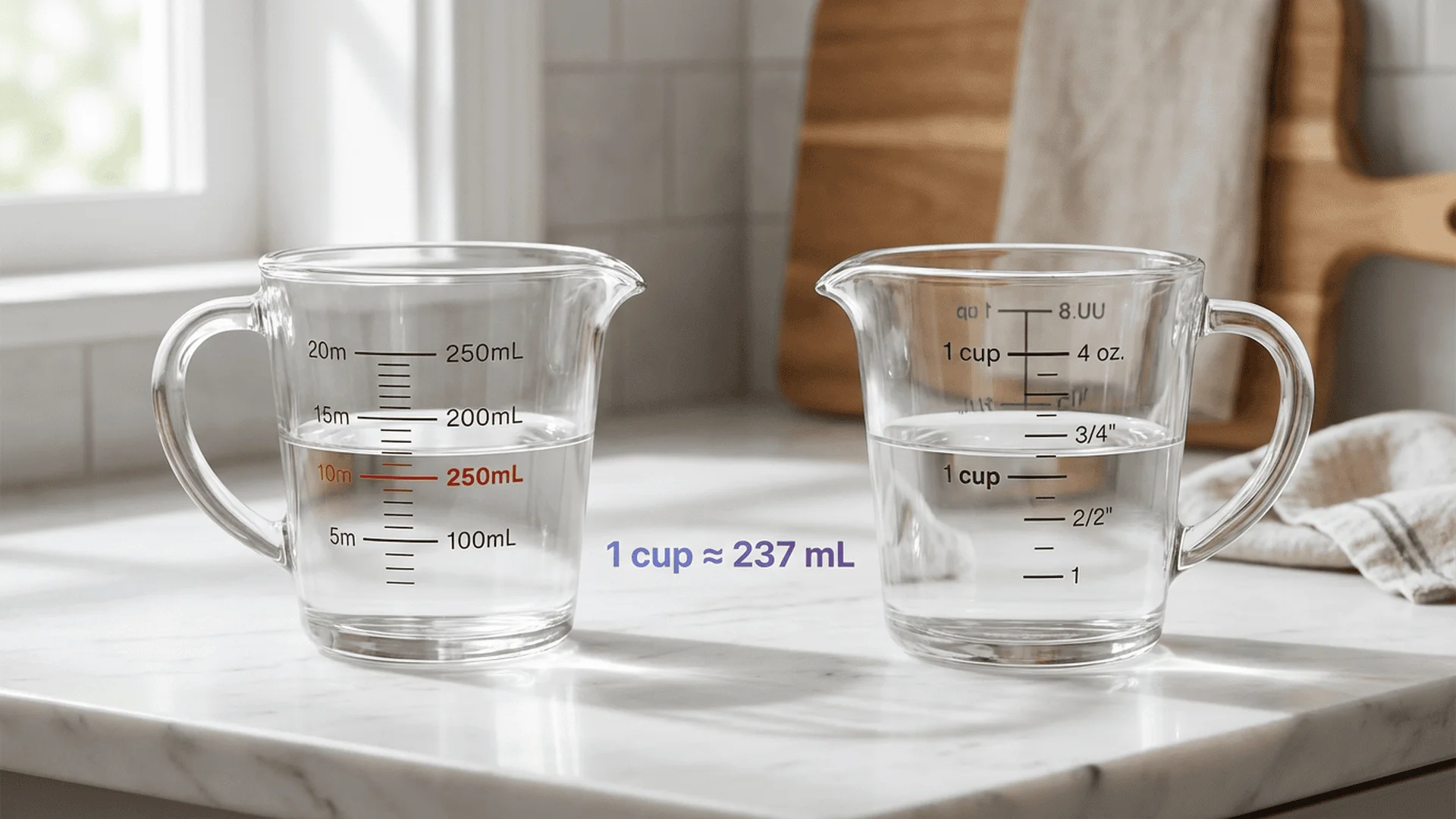
A European recipe calls for 500 mL milk. Your measuring cup shows ounces. How much do you pour? Exactly 16.9 fluid ounces—or just over 2 cups. Volume conversion errors ruin recipes, cause medication dosing mistakes, and complicate fuel efficiency calculations.
Volume measurement uses two incompatible systems: metric (liters, milliliters) and imperial (gallons, fluid ounces, cups). Add the confusion between US and UK gallons (20% different!), and mistakes become inevitable.
This complete guide shows you how to convert liters to gallons, milliliters to cups, fluid ounces to milliliters, and all volume units—with formulas, reference tables, and real-world examples from cooking, automotive, and everyday use.
Understanding Volume Units: Metric vs Imperial
Volume measures three-dimensional space occupied by liquids or gases. Unlike area (squared) or simple length, volume involves cubic measurements and specialized cooking units.
What Is Volume?
Definition:
Volume = Length × Width × Height (for regular shapes)
Example:
- Container: 10 cm × 10 cm × 10 cm
- Volume: 10 × 10 × 10 = 1,000 cm³ = 1 liter
Key Insight:
When you convert linear units (m → ft), you must CUBE the conversion factor for volume (not square like area).
Metric Volume Units
Primary Units:
- Milliliter (mL): 1/1000 liter, liquid medications, small recipes
- Centiliter (cL): 1/100 liter, rarely used except wine (75 cL bottle)
- Liter (L): Base unit, beverages, fuel, engine displacement
- Cubic meter (m³): 1,000 liters, large volumes, gas, water supply
Advantages:
- Decimal-based: 1 L = 1,000 mL (easy multiplication)
- 1 mL = 1 cm³ (volume equals weight for water: 1 mL water = 1 gram)
- Consistent worldwide
Where Used:
195+ countries (everywhere except USA for consumer products)
Imperial Volume Units
Primary Units:
- Fluid ounce (fl oz): 1/128 gallon (US), liquid medications, recipes
- Cup (cup): 8 fl oz, cooking measurements
- Pint (pt): 16 fl oz (US), beer, milk
- Quart (qt): 32 fl oz (US), milk, motor oil
- Gallon (gal): 128 fl oz (US), fuel, large beverages
Critical Distinction - US vs UK:
- US fluid ounce: 29.5735 mL
- UK (Imperial) fluid ounce: 28.4131 mL (smaller!)
- US gallon: 3.78541 liters
- UK gallon: 4.54609 liters (20% LARGER!)
Where Used:
- USA: All consumer products, recipes, fuel economy (MPG)
- UK: Partially (milk/beer sold in pints, but also liters)
Volume vs Capacity vs Displacement
Volume:
Total 3D space (used for containers, rooms)
Capacity:
Amount a container can hold (used for bottles, tanks)
Displacement:
Volume of liquid displaced by object (Archimedes principle)
- Ship displacement: Weight of water pushed aside
- Engine displacement: Total cylinder volume (e.g., 2.0L engine)
Special Cooking Volume Units
US Cooking Measurements:
- 1 tablespoon (tbsp) = 3 teaspoons = 0.5 fl oz = 14.79 mL
- 1 teaspoon (tsp) = 1/3 tablespoon = 4.93 mL
- 1 cup = 8 fl oz = 236.59 mL (not 250 mL!)
- 1 pint = 2 cups = 16 fl oz = 473.18 mL
- 1 quart = 2 pints = 32 fl oz = 946.35 mL
Metric Cooking Approximations:
- 1 metric cup = 250 mL (used in Australia, NZ)
- 1 mL ≈ 1 gram for water (used for weighing liquids)
For detailed cooking conversions, see our Cooking Unit Converter Guide.
For comprehensive volume understanding, see our Unit Converter Complete Guide.
Liters to Gallons: The Essential Conversion
Converting liters to gallons is crucial for fuel consumption, beverage quantities, and understanding international specifications.
The Exact Conversion Formula (US Gallons)
Liters to US Gallons:
1 liter = 0.264172 US gallons
Formula: US gallons = liters × 0.264172
Common Conversions:
- 1 L = 0.26 gal
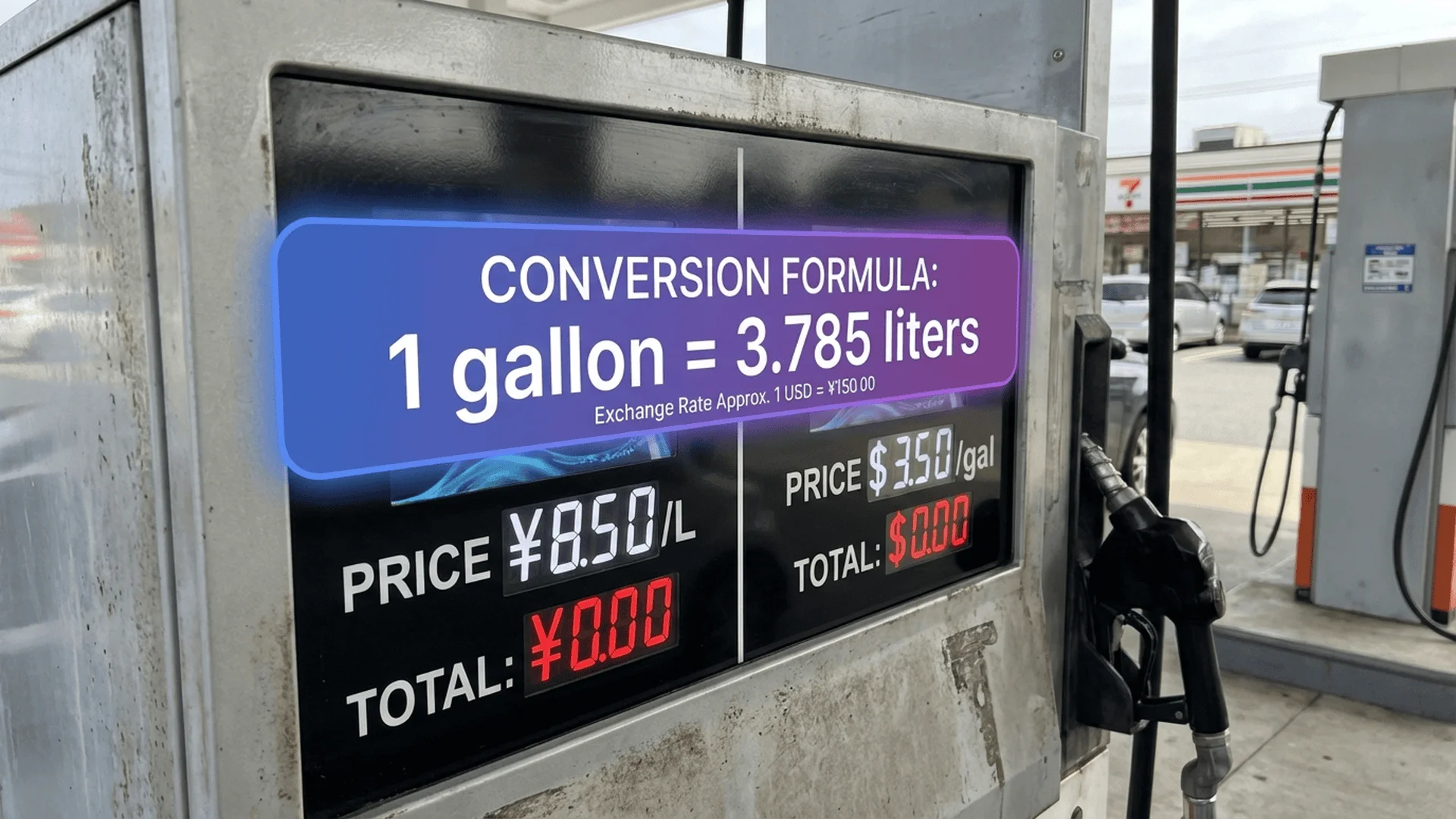
- 3.785 L = 1.00 gal (exactly)
- 5 L = 5 × 0.264172 = 1.32 gal
- 10 L = 10 × 0.264172 = 2.64 gal
- 20 L = 20 × 0.264172 = 5.28 gal
Quick Mental Math Method
Approximation: Divide liters by 4
Examples:
- 8 L ÷ 4 = 2 gal (actual: 2.11 gal, close!)
- 20 L ÷ 4 = 5 gal (actual: 5.28 gal)
- 40 L ÷ 4 = 10 gal (actual: 10.57 gal)
Better Accuracy: Divide by 3.8
- 10 L ÷ 3.8 = 2.63 gal (actual: 2.64 gal) ✅
Liters to Gallons Reference Table
| Liters | US Gallons | Common Use |
|---|---|---|
| 0.5 L | 0.13 gal | Water bottle |
| 1 L | 0.26 gal | Large water bottle |
| 1.5 L | 0.40 gal | Soda bottle |
| 2 L | 0.53 gal | Large soda bottle |
| 3.785 L | 1.00 gal | 1 gallon milk (exactly) |
| 5 L | 1.32 gal | Small fuel can |
| 10 L | 2.64 gal | Bucket |
| 15 L | 3.96 gal | Aquarium (small) |
| 20 L | 5.28 gal | Jerry can |
| 50 L | 13.21 gal | Fuel tank (motorcycle) |
| 60 L | 15.85 gal | Fuel tank (small car) |
| 75 L | 19.81 gal | Fuel tank (average car) |
UK (Imperial) Gallons Conversion
Liters to UK Gallons:
1 liter = 0.219969 UK gallons
Formula: UK gallons = liters × 0.219969
Key Difference:
UK gallon is 20% LARGER than US gallon
- 1 UK gallon = 4.54609 L
- 1 US gallon = 3.78541 L
- Difference: 0.76 L (about 3 cups!)
Example:
20 liters of fuel:
- In US gallons: 20 × 0.264172 = 5.28 US gal
- In UK gallons: 20 × 0.219969 = 4.40 UK gal
Why This Matters:
When comparing fuel economy:
- UK: 40 MPG (Imperial) = 40 miles per 4.546 L
- US: 40 MPG (US) = 40 miles per 3.785 L
- UK "40 MPG" is actually 33.3 US MPG!
Real-World Liters to Gallons Applications
Fuel Efficiency Conversion:
European car: 6 L/100 km. What's the MPG?
- Step 1: 6 L = 1.585 US gal
- Step 2: 100 km = 62.14 miles
- Step 3: MPG = 62.14 ÷ 1.585 = 39.2 MPG
Aquarium Setup:
Buying 75-liter aquarium. How many gallons?
- 75 L × 0.264172 = 19.81 gallons
- That's roughly a 20-gallon tank
Beverage Quantities:
European party: 50 liters of beverages needed
- 50 L × 0.264172 = 13.21 gallons
- Buy fourteen 1-gallon containers
Fuel Tank Capacity:
Car specifications: 60-liter fuel tank
- 60 L × 0.264172 = 15.85 gallons
- Standard mid-size car tank
Use our Unit Converter for instant liter-to-gallon calculations.

Gallons to Liters: The Reverse Conversion
Converting gallons to liters is essential when traveling internationally, buying imported products, or understanding metric specifications.
The Reverse Formula (US Gallons)
US Gallons to Liters:
1 US gallon = 3.78541 liters
Formula: liters = US gallons × 3.78541
Simplified:
Multiply gallons by 3.8 (close enough for most uses)
Common Conversions:
- 1 gal = 3.79 L
- 5 gal = 5 × 3.78541 = 18.93 L
- 10 gal = 10 × 3.78541 = 37.85 L
- 15 gal = 15 × 3.78541 = 56.78 L
- 20 gal = 20 × 3.78541 = 75.71 L
Mental Math Shortcut
Approximation: Multiply gallons by 4
Examples:
- 5 gal × 4 = 20 L (actual: 18.93 L, within 5%)
- 10 gal × 4 = 40 L (actual: 37.85 L)
- 15 gal × 4 = 60 L (actual: 56.78 L)
Better Accuracy: Multiply by 3.8
- 15 gal × 3.8 = 57 L (actual: 56.78 L) ✅
Gallons to Liters Conversion Table
| US Gallons | Liters | Common Use |
|---|---|---|
| 0.5 gal | 1.89 L | Half gallon milk |
| 1 gal | 3.79 L | 1 gallon milk/water |
| 2 gal | 7.57 L | Large beverage container |
| 3 gal | 11.36 L | Small aquarium |
| 5 gal | 18.93 L | Water cooler bottle |
| 10 gal | 37.85 L | Medium aquarium |
| 15 gal | 56.78 L | Car fuel tank (small) |
| 20 gal | 75.71 L | Car fuel tank (average) |
| 25 gal | 94.64 L | Water heater |
| 30 gal | 113.56 L | Large fuel tank |
| 50 gal | 189.27 L | Drum |
| 55 gal | 208.20 L | Oil barrel (standard) |
Practical Gallons to Liters Examples
Fuel Purchase:
Gas station: $3.50 per gallon. European friend asks price per liter:
- 1 gal = 3.78541 L
- Price per liter = $3.50 ÷ 3.78541 = $0.92 per liter
Water Heater Capacity:
50-gallon water heater. What's that in liters?
- 50 gal × 3.78541 = 189.27 liters
Aquarium Maintenance:
20-gallon aquarium. Filter rated for liters:
- 20 gal × 3.78541 = 75.71 L
- Need filter rated for ≥75 L
Fuel Consumption:
Drove 300 miles, used 12 gallons. L/100km?
- 12 gal = 45.42 L
- 300 miles = 482.80 km
- Consumption = (45.42 ÷ 482.80) × 100 = 9.41 L/100km
Milliliters to Fluid Ounces: Kitchen and Medical Conversions
Milliliters (mL) and fluid ounces (fl oz) are used for smaller volumes in cooking, baking, and medication dosing.
Milliliters to Fluid Ounces Formula
Exact Conversion (US):
1 mL = 0.033814 US fl oz
Formula: fl oz = mL × 0.033814
Common Conversions:
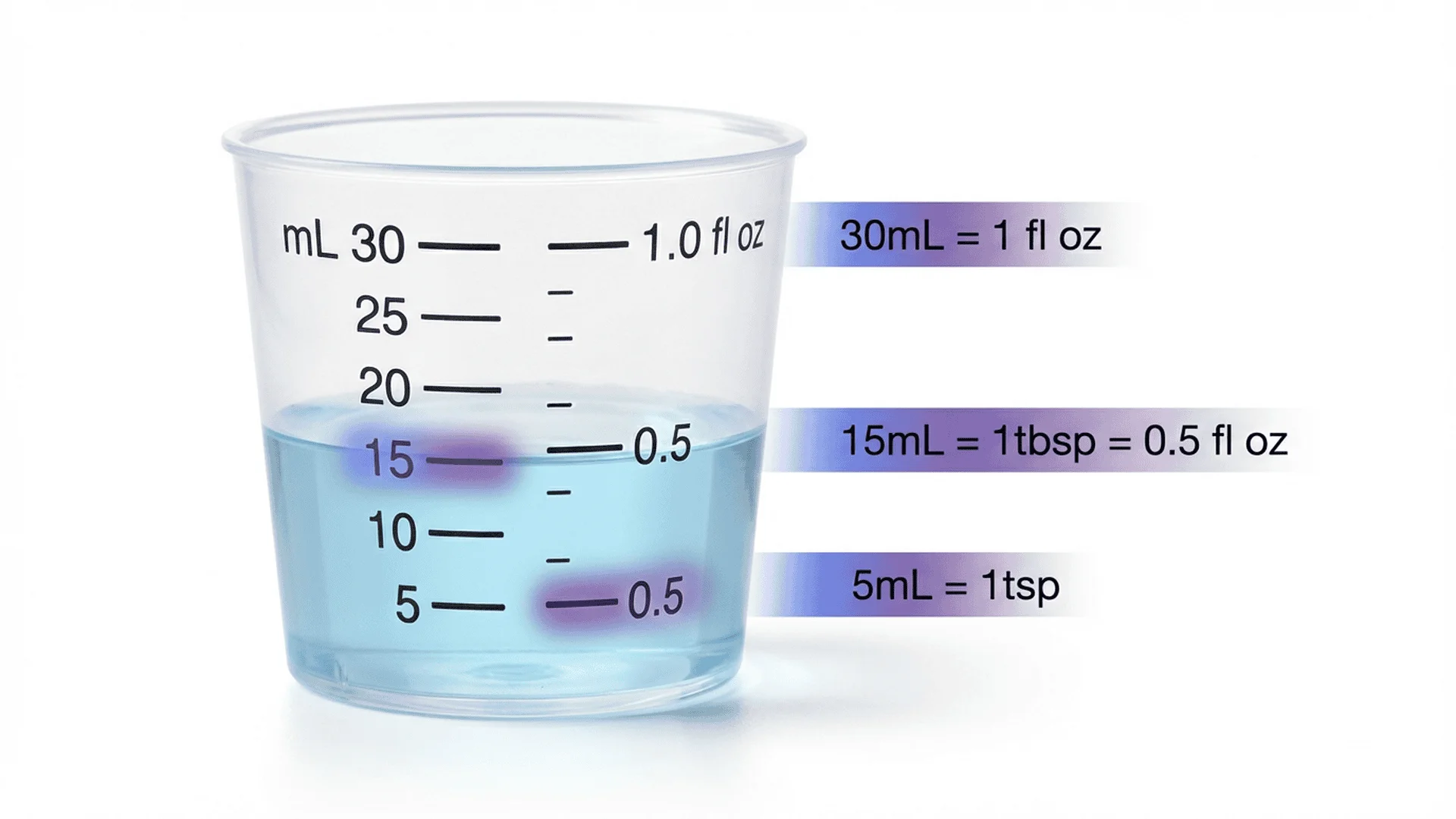
- 15 mL = 15 × 0.033814 = 0.507 fl oz ≈ 1 tablespoon
- 30 mL = 30 × 0.033814 = 1.014 fl oz ≈ 2 tablespoons
- 100 mL = 100 × 0.033814 = 3.38 fl oz
- 250 mL = 250 × 0.033814 = 8.45 fl oz ≈ 1 cup
- 500 mL = 500 × 0.033814 = 16.91 fl oz ≈ 2 cups
Fluid Ounces to Milliliters Formula
Reverse Conversion:
1 US fl oz = 29.5735 mL
Formula: mL = fl oz × 29.5735
Common Conversions:
- 1 fl oz = 29.57 mL ≈ 30 mL (medical dosing)
- 2 fl oz = 59.15 mL ≈ 60 mL
- 4 fl oz = 118.29 mL ≈ 120 mL
- 8 fl oz (1 cup) = 236.59 mL ≈ 240 mL or 250 mL
- 16 fl oz (1 pint) = 473.18 mL ≈ 475 mL or 500 mL
Milliliters to Cups and Tablespoons
Detailed Kitchen Conversions:
| Milliliters | Fluid Ounces | Tablespoons | Cups | Common Use |
|---|---|---|---|---|
| 5 mL | 0.17 fl oz | 1 tsp | - | Vanilla extract |
| 15 mL | 0.51 fl oz | 1 tbsp | - | Oil, sauce |
| 30 mL | 1.01 fl oz | 2 tbsp | 1/8 cup | Shot glass |
| 60 mL | 2.03 fl oz | 4 tbsp | 1/4 cup | Small serving |
| 80 mL | 2.71 fl oz | 5.3 tbsp | 1/3 cup | Recipe amount |
| 120 mL | 4.06 fl oz | 8 tbsp | 1/2 cup | Coffee cup |
| 180 mL | 6.08 fl oz | 12 tbsp | 3/4 cup | Recipe amount |
| 240 mL | 8.12 fl oz | 16 tbsp | 1 cup | Standard cup |
| 250 mL | 8.45 fl oz | - | 1.06 cups | Metric cup |
| 360 mL | 12.17 fl oz | - | 1.5 cups | Coffee mug |
| 480 mL | 16.23 fl oz | - | 2 cups | Pint |
| 500 mL | 16.91 fl oz | - | 2.11 cups | Half liter |
Real-World mL to fl oz Applications
Medication Dosing:
Prescription: "Take 10 mL twice daily"
Your medicine cup shows fl oz:
- 10 mL × 0.033814 = 0.338 fl oz
- That's slightly more than 1/3 fl oz (or 2 teaspoons)
Recipe Conversion:
European recipe: 200 mL milk. Your measuring cup shows ounces:
- 200 mL × 0.033814 = 6.76 fl oz
- Use between 6-7 fl oz mark (or ¾ cup + 1 tbsp)
Baby Formula:
Formula instructions: 30 mL per scoop. Bottle marked in ounces:
- 30 mL = 1.01 fl oz
- Each scoop = 1 fl oz
Cocktail Mixing:
Recipe calls for 45 mL vodka (1.5 oz shot):
- Verify: 45 mL × 0.033814 = 1.52 fl oz ✅
Water Intake:
Health goal: Drink 2 liters daily. Your water bottle is 16 fl oz:
- 2 L = 2,000 mL
- 2,000 mL × 0.033814 = 67.63 fl oz
- Need: 67.63 ÷ 16 = 4.2 bottles per day
Cups to Milliliters: Cooking Measurement Conversion
Cups are standard in US cooking but confusing internationally. Understanding cup-to-mL conversion is essential for following recipes.
US Cup to Milliliters
Standard US Cup:
1 US cup = 236.588 mL
Rounded: 1 cup ≈ 240 mL (cooking) or 250 mL (metric)
Fractional Cups:
- 1/4 cup = 59.15 mL ≈ 60 mL
- 1/3 cup = 78.86 mL ≈ 80 mL
- 1/2 cup = 118.29 mL ≈ 120 mL
- 2/3 cup = 157.73 mL ≈ 160 mL
- 3/4 cup = 177.44 mL ≈ 180 mL
- 1 cup = 236.59 mL ≈ 240 mL
- 2 cups = 473.18 mL ≈ 475 mL or 500 mL
Metric Cup (Australia, New Zealand)
Metric Cup:
1 metric cup = 250 mL (exactly)
Difference from US Cup:
- US cup: 236.59 mL
- Metric cup: 250 mL
- Difference: 13.41 mL (5.7% larger)
When It Matters:
For most recipes, difference is negligible. But for precise baking:
- 4 cups flour (US) = 946 mL
- 4 cups flour (metric) = 1,000 mL
- Difference: 54 mL (about 3.5 tbsp) - can affect texture!
Cups to Milliliters Table
| Cups | Milliliters (exact) | Milliliters (rounded) | Common Use |
|---|---|---|---|
| 1/8 cup | 29.57 mL | 30 mL | 2 tablespoons |
| 1/4 cup | 59.15 mL | 60 mL | 4 tablespoons |
| 1/3 cup | 78.86 mL | 80 mL | 5.3 tablespoons |
| 1/2 cup | 118.29 mL | 120 mL | 8 tablespoons |
| 2/3 cup | 157.73 mL | 160 mL | 10.6 tablespoons |
| 3/4 cup | 177.44 mL | 180 mL | 12 tablespoons |
| 1 cup | 236.59 mL | 240-250 mL | Standard |
| 1.5 cups | 354.88 mL | 355-360 mL | - |
| 2 cups | 473.18 mL | 475-500 mL | 1 pint |
| 3 cups | 709.76 mL | 710-720 mL | - |
| 4 cups | 946.35 mL | 950 mL-1 L | 1 quart |
Practical Cups to mL Examples
Baking Conversion:
US recipe: 2 cups flour, 1 cup sugar, ½ cup butter
European measurements:
- 2 cups flour = 2 × 236.59 = 473 mL ≈ 475 mL
- 1 cup sugar = 237 mL ≈ 240 mL or 250 mL
- ½ cup butter = 118 mL ≈ 120 mL
Coffee Making:
Coffee maker: "10 cups capacity"
In liters:
- 10 cups × 236.59 = 2,365.9 mL = 2.37 liters
Rice Cooking:
Recipe: 2 cups rice, 4 cups water
Your rice cooker shows mL:
- 2 cups rice = 473 mL
- 4 cups water = 946 mL ≈ 950 mL or 1 liter
Smoothie Recipe:
1.5 cups frozen fruit, 1 cup liquid
Blender marked in mL:
- 1.5 cups fruit = 355 mL
- 1 cup liquid = 237 mL
- Total: 592 mL
Cubic Meters and Large Volume Conversions
For construction, shipping, and utilities, cubic meters (m³) and cubic feet (ft³) measure large volumes.
Cubic Meters to Other Units
Cubic Meter Conversions:
1 m³ = 1,000 liters (exactly)
1 m³ = 35.3147 cubic feet (ft³)
1 m³ = 264.172 US gallons
1 m³ = 1.30795 cubic yards (yd³)
Common Conversions:
- 1 m³ = 1,000 L (water, gas consumption)
- 5 m³ = 5,000 L = 1,321 gallons
- 10 m³ = 10,000 L = 2,642 gallons
- 100 m³ = 100,000 L = 26,417 gallons
Cubic Meters to Cubic Feet
Formula:
1 m³ = 35.3147 ft³
Formula: ft³ = m³ × 35.3147
Example:
Storage unit: 20 m³ capacity
- 20 m³ × 35.3147 = 706.29 ft³
Large Volume Conversion Table
| Cubic Meters | Liters | Cubic Feet | US Gallons | Use |
|---|---|---|---|---|
| 0.1 m³ | 100 L | 3.53 ft³ | 26.42 gal | Small tank |
| 0.5 m³ | 500 L | 17.66 ft³ | 132.09 gal | Water heater |
| 1 m³ | 1,000 L | 35.31 ft³ | 264.17 gal | IBC tote |
| 5 m³ | 5,000 L | 176.57 ft³ | 1,320.86 gal | Small pool |
| 10 m³ | 10,000 L | 353.15 ft³ | 2,641.72 gal | Large tank |
| 20 m³ | 20,000 L | 706.29 ft³ | 5,283.44 gal | Shipping container |
| 50 m³ | 50,000 L | 1,765.73 ft³ | 13,208.60 gal | Pool (average) |
| 100 m³ | 100,000 L | 3,531.47 ft³ | 26,417.21 gal | Large pool |
Real-World Large Volume Applications
Water Usage:
Household monthly usage: 15 m³
In gallons:
- 15 m³ × 264.172 = 3,962.6 gallons
- Average US household: ~3,000-4,000 gallons/month ✓
Swimming Pool:
Pool dimensions: 10m × 5m × 1.5m deep
- Volume: 10 × 5 × 1.5 = 75 m³
- In liters: 75 × 1,000 = 75,000 liters
- In gallons: 75 × 264.172 = 19,812.9 gallons
Natural Gas Consumption:
Monthly gas bill: 50 m³
In cubic feet:
- 50 m³ × 35.3147 = 1,765.74 ft³
- US gas meters show CCF (100 ft³): 1,765.74 ÷ 100 = 17.66 CCF
Shipping Container:
20-foot container: 33 m³ capacity
- 33 m³ = 33,000 liters
- 33 m³ = 1,165.39 cubic feet
For area-to-volume relationships, see our Area Conversion Guide.
Fuel Economy: L/100km vs MPG Conversion
Fuel economy uses different standards internationally. Understanding the conversion helps compare vehicle efficiency.
Understanding the Systems
US System (MPG - Miles Per Gallon):
- Higher is better (more miles per gallon)
- Typical range: 20-40 MPG (cars), 15-25 MPG (trucks)
- Measures: Distance per unit fuel
European/International System (L/100km):
- Lower is better (fewer liters per 100 kilometers)
- Typical range: 5-10 L/100km (cars), 8-12 L/100km (trucks)
- Measures: Fuel per unit distance
Key Difference:
These are INVERSE relationships:
- High MPG = Low L/100km (efficient)
- Low MPG = High L/100km (inefficient)
Conversion Formulas
MPG to L/100km:
L/100km = 235.215 ÷ MPG (US)
L/100km to MPG:
MPG (US) = 235.215 ÷ L/100km
Why 235.215?
- 100 km = 62.1371 miles
- 1 US gallon = 3.78541 liters
- Conversion factor = (100 ÷ 62.1371) × 3.78541 = 235.215
Fuel Economy Conversion Table
| MPG (US) | L/100km | Efficiency |
|---|---|---|
| 15 MPG | 15.68 L/100km | Poor (SUV/truck) |
| 20 MPG | 11.76 L/100km | Below average |
| 25 MPG | 9.41 L/100km | Average car |
| 30 MPG | 7.84 L/100km | Good |
| 35 MPG | 6.72 L/100km | Very good |
| 40 MPG | 5.88 L/100km | Excellent |
| 45 MPG | 5.23 L/100km | Hybrid |
| 50 MPG | 4.70 L/100km | Efficient hybrid |
| 55 MPG | 4.28 L/100km | Very efficient |
| 60 MPG | 3.92 L/100km | Plug-in hybrid |
Fuel Economy Examples
Car Comparison:
- US spec: Honda Civic - 35 MPG combined
- European spec: Same car - 6.7 L/100km
- Verify: 235.215 ÷ 35 = 6.72 L/100km ✅
Fuel Cost Calculation:
Car gets 8 L/100km. Gas costs $1.50/liter. Drive 500 km:
- Fuel needed: (8 ÷ 100) × 500 = 40 liters
- Cost: 40 × $1.50 = $60
In MPG:
- 8 L/100km = 235.215 ÷ 8 = 29.4 MPG
- 500 km = 310.7 miles
- Fuel needed: 310.7 ÷ 29.4 = 10.57 gallons
- At $5.67/gal: 10.57 × $5.67 = $59.93 ✓ (matches!)
Hybrid vs Regular:
- Regular car: 30 MPG (7.84 L/100km)
- Hybrid: 50 MPG (4.70 L/100km)
- Savings: 7.84 - 4.70 = 3.14 L/100km (40% reduction!)
Common Volume Conversion Mistakes
Volume conversions are error-prone due to multiple unit systems and cooking measurement confusion.
Mistake #1: Confusing US and UK Gallons
Wrong:
Assuming all gallons are equal ❌
Right:
Always specify US or UK (Imperial) gallons ✅
Example:
UK car: 45 MPG (Imperial)
Converting to L/100km:
- Wrong: 235.215 ÷ 45 = 5.23 L/100km ❌
- Right (UK formula): 282.481 ÷ 45 = 6.28 L/100km ✅
Error: 1.05 L/100km off (17% error!)
When It Matters:
- Comparing fuel economy specs
- UK recipes vs US recipes
- Importing vehicles
Mistake #2: Using Weight Instead of Volume for Liquids
Wrong:
"1 cup = 250 grams" (depends on liquid density!) ❌
Right:
1 cup water ≈ 240 mL ≈ 240 grams (water only!) ✅
Density Matters:
- 1 cup water = 240 grams
- 1 cup oil = 220 grams (lighter)
- 1 cup honey = 340 grams (heavier)
- 1 cup flour = 125 grams (much lighter!)
Prevention:
For liquids, always convert volume to volume (mL to cups).
For dry ingredients, use weight conversions (grams to cups).
Mistake #3: Confusing Fluid Ounces and Weight Ounces
Fluid Ounce (fl oz):
- Volume measurement
- 1 fl oz = 29.5735 mL
Ounce (oz):
- Weight measurement
- 1 oz = 28.3495 grams
Critical Difference:
They're NOT equal (except for water)!
Example:
Recipe: "8 oz cream cheese"
- This means 8 oz by WEIGHT = 227 grams
- NOT 8 fl oz by volume (which would be 237 mL)
For Water Only:
8 fl oz water ≈ 8 oz weight (because water density = 1 g/mL)
Prevention:
Check recipe context. If it says "fl oz," it's volume. If just "oz" with solid/semi-solid, it's weight.
Mistake #4: Rounding Cups to 250 mL
Wrong:
1 cup = 250 mL ❌ (in US recipes)
Right:
1 US cup = 236.59 mL ✅
When It Matters:
- Precise baking (cakes, breads)
- Large batches (error multiplies)
- Professional cooking
Example:
Recipe: 4 cups flour
- Using 250 mL: 4 × 250 = 1,000 mL
- Using 236.59 mL: 4 × 236.59 = 946.36 mL
- Error: 53.64 mL (about 3.5 tbsp flour difference - affects texture!)
Exception:
Australian/NZ recipes use metric cups (250 mL exactly).
Mistake #5: Forgetting Temperature Affects Volume
Liquids Expand When Heated:
- Water at 4°C: 1.000 L
- Water at 80°C: 1.029 L (2.9% expansion)
Gases Expand Dramatically:
- Air at 20°C: 1 L
- Air at 100°C: 1.27 L (27% expansion)
When It Matters:
- Hot beverage measurements (coffee, tea)
- Engine displacement (measured cold)
- Gas volume calculations (chemistry)
Prevention:
For precision, note temperature. Most cooking assumes room temperature (20-25°C).
Conclusion: Mastering Volume Conversion
Volume conversion is essential for cooking, automotive calculations, travel, and everyday liquid measurements. Multiple incompatible systems (liters, gallons, cups, milliliters, fluid ounces) make conversions necessary—but the US vs UK gallon difference adds extra complexity.
Key Takeaways
Essential Formulas:
1. Liters to US gallons: L × 0.264172 (or ÷3.8)
2. US gallons to liters: gal × 3.78541 (or ×3.8)
3. mL to fl oz: mL × 0.033814 (or ÷30)
4. Fl oz to mL: fl oz × 29.5735 (or ×30)
5. Cups to mL: cups × 236.59 (or ×240)
Quick Reference:
- 1 L = 0.26 US gal ≈ 4 cups ≈ 33.8 fl oz
- 1 US gal = 3.79 L = 16 cups = 128 fl oz
- 1 cup = 236.59 mL ≈ 240 mL ≈ 8 fl oz
- 1 UK gal = 4.55 L (20% larger than US gallon!)
Common Mistakes to Avoid:
- Confusing US and UK gallons (20% difference!)
- Using weight oz instead of fluid oz
- Rounding 1 cup to 250 mL (it's 236.59 mL)
- Assuming all liquids have same weight-to-volume ratio
- Forgetting to specify gallon type (US vs Imperial)
Critical Applications:
- Cooking: 1 cup ≠ 250 mL (use 240 mL for US recipes)
- Fuel economy: Higher MPG = Lower L/100km
- Medicine: Always use mL (1 tsp = 5 mL, 1 tbsp = 15 mL)
- International travel: Verify gallon type for fuel prices
When to Use Which Tool
Mental Math:
- Quick kitchen estimates (×4 for gal→L, ÷4 for L→gal)
- Approximate fuel calculations
Digital Converter:
- Precise recipe conversions
- Medication dosing
- Fuel economy comparisons
- International specifications
- Example: Tool Master Unit Converter
Measuring Tools:
- Graduated cylinders (science, medicine)
- Measuring cups with dual scales (cooking)
- Fuel flow meters (automotive)
Explore More Conversion Resources
Related Guides:
- Unit Converter Complete Guide - All conversion types
- Weight Conversion Guide - Weight vs volume for ingredients
- Length Conversion Guide - Dimensional measurements
- Area Conversion Guide - 2D to 3D volume relationships
Specialized Applications:
- Cooking Unit Converter - Recipe-specific conversions
- Pressure Conversion Guide - Fluid pressure calculations
Professional Tools:
- Excel Unit Converter Formulas - Batch volume conversions
- Best Unit Converter Apps 2025 - Mobile volume converters
Try Our Free Tool:
Tool Master Unit Converter - Convert volume, weight, temperature, and 30+ units instantly. 100% free, no registration, works offline.
Browse All Tools:
Visit our Conversion Tools Category for complete collection.
For technical implementation, see our Unit Converter Technical Documentation.
References
- National Institute of Standards and Technology (NIST). (2024). "Volume Measurement Standards and Conversion Factors." NIST Handbook 44, Section 4.
- International Organization for Standardization (ISO). (2024). "ISO 80000-3: Quantities and Units - Space and Time."
- United States Department of Agriculture (USDA). (2024). "USDA Cooking Measurement Guidelines." Food Safety and Inspection Service.
- United States Environmental Protection Agency (EPA). (2024). "Fuel Economy Testing and Conversion Standards."
- British Standards Institution (BSI). (2024). "BS 7829: Specification for Measuring Instruments - Liquid Capacity Measures."
- American Petroleum Institute (API). (2024). "API Manual of Petroleum Measurement Standards, Chapter 12: Calculation of Petroleum Quantities."